



Winter makeup is built for low light. Deep berry lips and full-coverage foundation make sense in January, when the daylight is grey and most of us are at our palest. Then the sun starts rising earlier, the light turns warmer and brighter, and those same products can suddenly look like a mask. The fix is not a whole new routine. For most people it comes down to three things — base, blush and lip colour — plus a couple of small changes to finish and texture. Here is how to move your makeup into spring without throwing out a kit you still like.
Why your winter face reads differently in spring
Two things change at once: the light and your skin. Winter daylight is cooler and dimmer, so deeper, more opaque colours look softer and more natural than they really are. Under brighter spring light, the edges of a heavy base become visible, and a plum lip that looked moody in February can look flat and heavy by April.
Your skin changes too. Months of indoor heating and cold wind leave many people drier and slightly duller. As the weather warms, oil production often picks up and makeup that sat still all winter starts to slide or separate by mid-afternoon. Add a little more time outdoors — even a few walks without a hat — and your skin tone may shift a half shade warmer, which throws off a foundation matched in January.
Foundation: drop half a shade and half the coverage
Start here, because the base decides how everything else looks on top of it. If you are between your winter shade and the next one up, buy the lighter option and warm it with bronzer, or mix a drop of the two. A foundation that is slightly too dark is far more obvious in spring than one that is slightly too light.
Coverage matters as much as shade. A full-coverage matte formula that carried you through winter can look like a layer of paint in direct sun. Consider moving to a skin tint, a serum foundation or a tinted moisturiser, and use concealer only where you actually need it — under the eyes, around the nose, on any redness. Sheer base plus targeted concealer reads fresher than one thick layer everywhere.
Finish is the third lever. Swap a heavy setting powder for a light dusting through the T-zone only, and let the cheeks and jaw keep a little natural glow. If you rely on powder to control shine, keep it, but press it in with a small brush rather than sweeping it across the whole face.
Test before you buy
Swatch along the jawline, not the back of your hand, and step outside to check it in daylight. Give it ten minutes, because many formulas darken slightly as they settle. Ask for a sample sachet if you can — a shade that works at 9am in a shop mirror can look completely different at 4pm outdoors.
Blush: from berry and plum to rose and peach
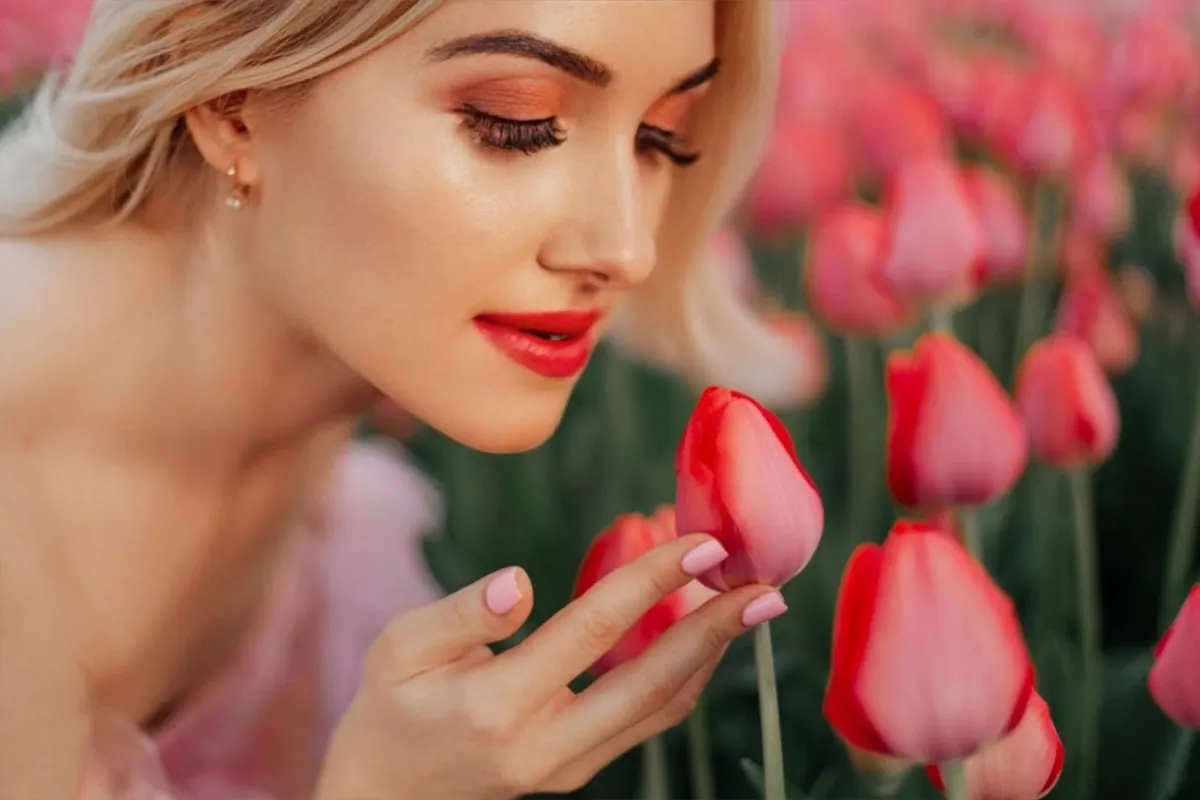
Blush is where the seasonal shift is most visible. Berry and plum flatter pale, cool winter skin and moody light. In brighter light, the same shades can look bruised or simply flat. Spring suits softer warmth: rose, peach, apricot, soft coral.
Match the temperature to your undertone rather than to the season alone. If you lean warm, peach and apricot will look like they belong on your face. If you lean cool, go for a cool rose or a soft mauve-pink instead of chasing orange. If you are neutral, warm rose is the safest single choice.
Formula makes a difference too. Cream and liquid blushes tap in with fingers, melt into sheer base and look like skin rather than powder. Set them with a light layer of a similar powder blush if you need them to last a full day. And move the placement up slightly — a little higher on the cheek, blended toward the temple — so the flush looks lifted rather than low and heavy.
Lips: the quickest, cheapest swap
If you only change one thing, change this. Put the deep wine, brick and plum shades at the back of the drawer and bring forward rose, coral, soft pink and sheer red. Texture matters as much as colour: matte liquid lipsticks that survived cold wind can feel tight and drying in warmer weather. Satin finishes, tinted balms, lip oils and glosses feel lighter and wear down more gracefully through the day.
If bright lipstick feels like a lot
Start with a tinted balm in a warm rose or peach, or blot a brighter lipstick on with a fingertip and build from there. A sheer coral looks fresh with a bare base and takes ten seconds. Keep one deeper shade — a muted red or deep rose — for evenings, when the light drops and your winter instincts come back.
Eyes, bronzer and finishing touches
Eyes are usually the last thing to change, but a small shift helps. Move from charcoal and black to bronze, soft brown, champagne and peach. If you wear black kohl daily, try a brown or bronze pencil for a few weeks; it defines without closing the eye. A wash of shimmer on the lid, applied with a finger, is enough for daytime.
With bronzer, go lighter and less matte. A satin or softly luminous formula looks more like sun on skin than a flat brown powder, and it is easier to blend out if you overdo it. The same rule applies to highlighter: swap frosty silver for something closer to a dewy skin finish, and apply it only where light naturally hits — the tops of the cheekbones, the bridge of the nose.
A simple winter-to-spring swap list
- Foundation: full-coverage matte → skin tint or serum foundation, half a shade lighter
- Powder: all-over setting powder → light dusting on the T-zone only
- Blush: deep berry cream → rose, peach or soft coral, placed slightly higher
- Lip colour: plum, wine, brick → rose, coral, soft pink, sheer red
- Lip texture: matte liquid → satin, balm, oil, gloss
- Eyeshadow: charcoal, black, cool taupe → bronze, warm brown, champagne
- Liner: black kohl → brown or bronze pencil
- Highlighter: frosty silver → dewy, skin-like finish
How to change over without wasting what you own
Do it in three steps rather than all at once. In the first week, change only your lip colour and see how it feels in daylight. In the second week, switch your base to something lighter and adjust powder. In the third, change blush and eye shades. Spreading it out makes the difference easier to judge, and it stops you from buying five new products in one go and disliking all of them.
Clean your winter products before they go into storage: wipe the rims of compacts, sharpen pencils, and check anything liquid for a change in smell or texture before you keep it. Keep one or two winter favourites within reach — a deep rose lipstick and a warm bronzer work well on cooler spring evenings. Whatever your base, wear a dedicated sunscreen underneath on days you will be outside; the SPF in makeup is rarely enough on its own, and reapplying over makeup is harder than starting with proper protection.
Finally, pay attention to how your skin behaves as the season turns. If you notice persistent redness, itching, breakouts or irritation after introducing new products, stop using them and give your skin a few days of your usual simple routine. A pharmacist or doctor can advise if it does not settle.
Photo: Karina Rymarchuk / Pexels