



A bath is one of the few things you can do for yourself that asks nothing in return. No equipment, no subscription, no learning curve. Yet most soaks happen by accident: the water is too hot, the overhead light is blazing, a phone is balanced on the edge of the tub, and twenty minutes later you feel wrung out rather than rested.
The difference between a bath and a genuinely restorative bath comes down to a few details — temperature, what goes into the water, how the room is lit, and how long you stay in. Get those roughly right and an ordinary Tuesday evening starts to feel like a small holiday.
Start With Temperature, Not Products
Water that's hot enough to turn your skin pink is working against you. Aim for something you could comfortably sit in for twenty minutes: roughly 37–40°C, or 98–104°F, which is close to body temperature. If you don't have a thermometer, test with your elbow or inner wrist rather than your hand — those areas are more sensitive and give a truer reading.
Fill the tub so the water reaches around chest height. Deeper than that and the pressure on your chest can make it harder to breathe slowly, which defeats the purpose. If you like it warmer than 40°C, keep the soak short and cool down gradually afterwards rather than standing up quickly.
Warm, not scalding, is the whole principle. You want your muscles to soften, not your energy to drain.
What to Put in the Water
The honest answer is that most of the benefit comes from warm water and stillness. Add-ins mostly change how the water feels, which matters more than it sounds — a bath that smells and feels pleasant is one you'll actually repeat.
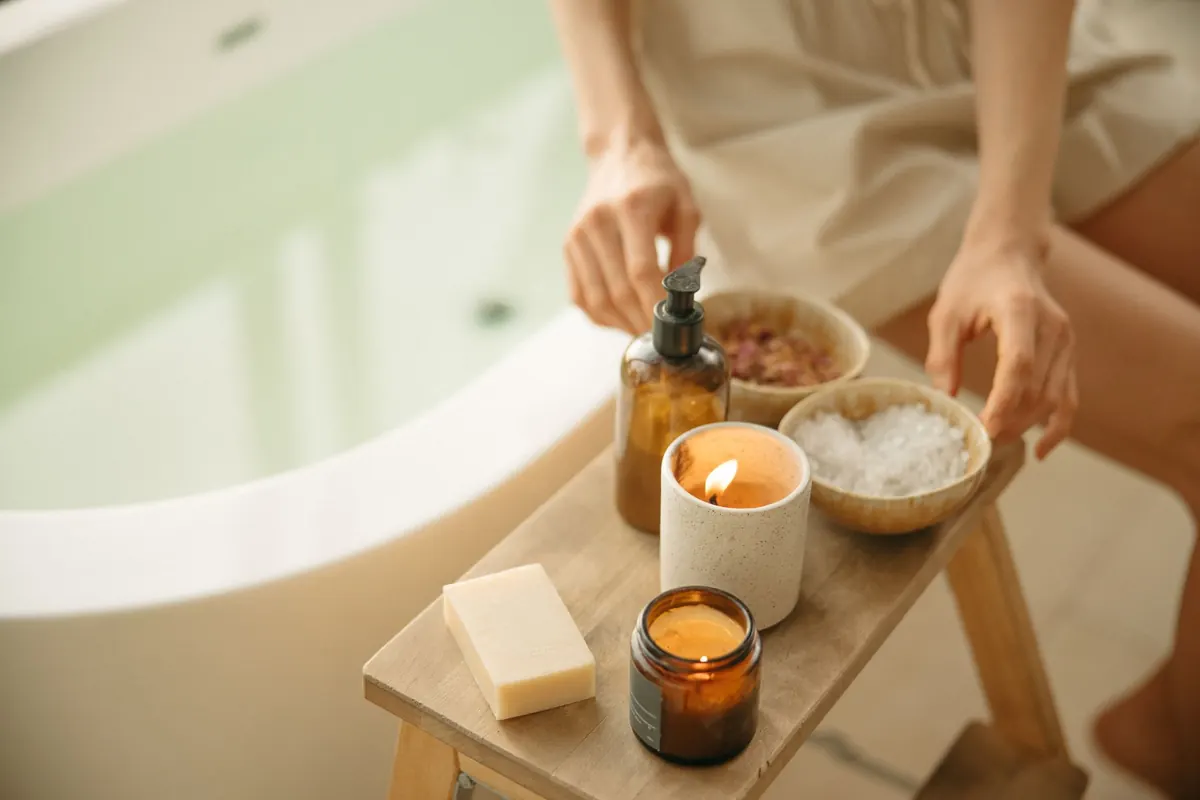
- Epsom salts (magnesium sulfate) dissolve quickly and make the water feel silkier. Claims about absorbing magnesium through the skin are overstated; treat salts as a comfort and ritual ingredient rather than a treatment.
- Fine sea salt or Himalayan salt works much the same way. Use a generous handful, not a whole bag.
- Colloidal oatmeal or plain ground oats in a tied cloth or sock is a gentle option if your skin is reactive or itchy.
- A tablespoon of carrier oil — sweet almond, jojoba, grapeseed — adds a soft, moisturising quality. Be careful: oil makes the tub slippery.
- Essential oils should be diluted first. Add a few drops to a spoonful of carrier oil or a small dish of salt, stir, then tip in. Never pour them straight into the water, and skip strong scents like eucalyptus or peppermint if you're winding down for sleep.
If you're pregnant, have sensitive or broken skin, or manage a heart or blood pressure condition, ask a pharmacist or doctor before adding anything new — including salts.
Set the Room Before You Step In
Lighting does more for a bath than any product on the shelf. Overhead bulbs flatten the mood and keep your brain in work mode. Turn them off entirely if you can and use one or two low sources instead: a small lamp on the landing, a couple of candles placed well away from towels and curtains, or a dimmable bathroom light if you have one.
While you're at it:
- Warm the room first — close the door and let the hot water run for a minute before you get in.
- Hang your towel and robe somewhere warm, or drape them over a radiator.
- Put a glass of water within reach. Warm water is dehydrating over time.
- Leave your phone outside the room, or at least on silent and face down.
- Queue up thirty minutes of music you won't want to skip. Something slow and instrumental works best; vocals tend to pull your attention back into thinking.
Timing: How Long and When
Fifteen to twenty minutes is the sweet spot for most people. Beyond half an hour, the heat starts to work against you — lightheadedness, a racing pulse, and skin that feels tight afterwards. If you want a longer soak, run the water slightly cooler or top it up with warm water partway through.
For sleep, the timing matters as much as the length. A bath roughly sixty to ninety minutes before bed gives your body time to shed the heat it absorbed, and that gentle drop in core temperature is one of the natural signals that helps you feel sleepy. Climbing straight into bed while still flushed tends to have the opposite effect.
Skip the bath on a full stomach, and never combine it with alcohol. Both put extra strain on your circulation.
A Sequence You Can Repeat
Rituals work because they're predictable. Once the steps are familiar, your body starts anticipating the wind-down before the water is even run.
- Ten minutes before. Clear the surfaces, lay out a towel and clean clothes, and fill your water glass.
- Fill the tub. Add salts or oils while the water runs so they disperse instead of pooling.
- Dim the room. Lights down, phone out, music on.
- Soak. Spend the first five minutes doing nothing at all — no scrubbing, no reading. Let your shoulders drop.
- Cool down gently. A cool flannel on the back of your neck or a brief lukewarm rinse helps you avoid feeling faint when you stand.
- Pat dry and moisturise while your skin is still damp, which locks in more moisture.
- Keep the lights low for the rest of the evening. Straight into a robe, into bed or a quiet chair.
A Note on Candles and Oils
Never leave burning candles unattended, and keep them clear of anything that could catch. If you're unsteady on your feet, skip them and use a small battery lamp instead. A slick, oily bath is also worth rinsing before you step out — a quick wipe of the tub floor with hot water prevents a nasty slip.
Making It Stick
You don't need an elaborate shelf of products. A bath that works is one you'll take again next week, so build it around what you already own and keep the steps short enough to survive a tired evening. Two or three nights a week is plenty.
Treat the routine as a signal rather than a task: same time, same low light, same order of steps. After a few repetitions, the smell of the salts and the sound of the running water will start doing some of the work for you.
And if you're dealing with persistent muscle pain, poor sleep, or a skin condition, a bath is a comfort, not a cure — speak to a doctor or pharmacist about what's actually going on.
Photo: Yaroslav Shuraev / Pexels